What actually changes when Python executes one line?
Start here
What actually changes when Python executes one line?
Python evaluates expressions, binds names to objects, changes program state, and produces observable output. Thinking in state changes is more reliable than memorising syntax.
Building interactive view…
Understand
Build the mental model
Python evaluates expressions, binds names to objects, changes program state, and produces observable output. Thinking in state changes is more reliable than memorising syntax. Trace variables and types at each meaningful step. When debugging, ask which assumption about state stopped being true.
Click a stage to inspect what happens, what changes, and what should be checked before moving on.
Stage 1
Source / input
Identify exactly what enters this stage: its shape, type, scale, units and any missing or invalid values that could alter the next operation. Technical context for Python: How Code Becomes State: Execution is a sequence of evaluation, name binding, function calls and control-flow decisions. Types define available operations; mutability determines whether an object can change in place.
Practitioner checkpoint: Trace variables and types at each meaningful step. When debugging, ask which assumption about state stopped being true.
What happens if…?
Break the assumption deliberately
Change an input type and predict which operation will fail first.
Move the control and explain what you expect before reading the visual.
Technical lens
Formalise what the visual is doing
Execution is a sequence of evaluation, name binding, function calls and control-flow decisions. Types define available operations; mutability determines whether an object can change in place.
Technical questionUse a tiny case to make the mechanism observable. Execution is a sequence of evaluation, name binding, function calls and control-flow decisions. Types define available operations; mutability determines whether an object can change in place. Verify one intermediate quantity, state change or mapping independently; then predict the consequence of this change: Change an input type and predict which operation will fail first.
Practitioner lens
Use it responsibly
Trace variables and types at each meaningful step. When debugging, ask which assumption about state stopped being true.
Transfer testTransfer this idea to a new example and justify each decision using this practitioner rule: Trace variables and types at each meaningful step. When debugging, ask which assumption about state stopped being true. Then explain what should change if you deliberately test: Change an input type and predict which operation will fail first.
Worked exploration
Use the visual as an experiment, not decoration
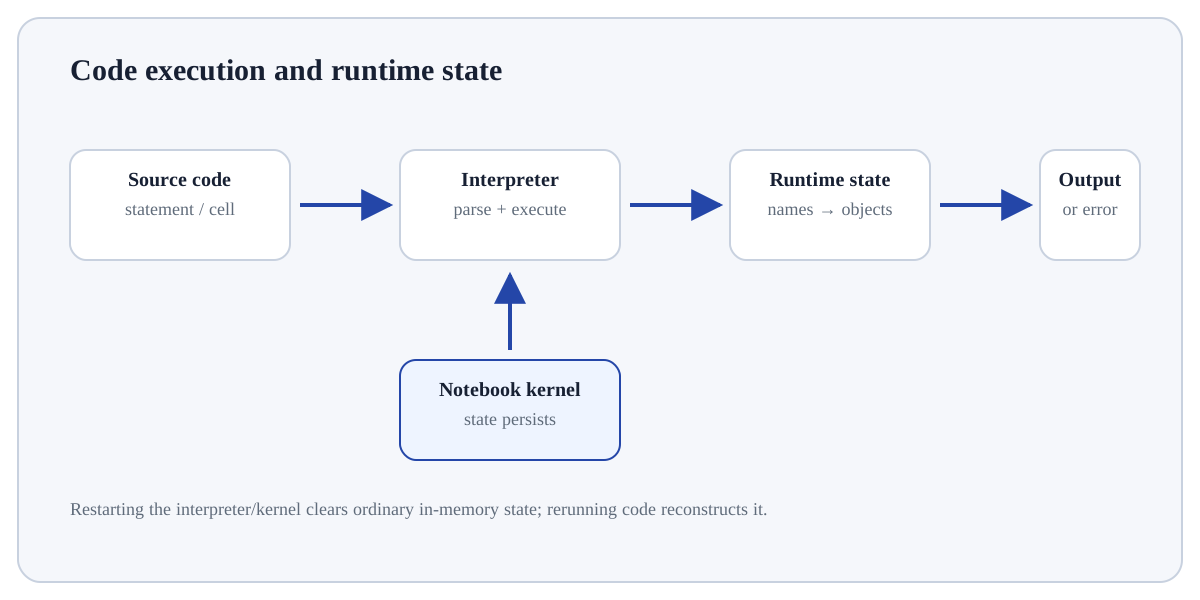
Run x = 10, then y = x * 2. Inspect the name bindings. Restart the interpreter/kernel and try y = x * 2 again: the failure shows that runtime state, not the visible code alone, determines what names exist.
Technical lens
Execution is a sequence of evaluation, name binding, function calls and control-flow decisions. Types define available operations; mutability determines whether an object can change in place.
Practitioner check
Trace variables and types at each meaningful step. When debugging, ask which assumption about state stopped being true.
Prediction before interaction
Change an input type and predict which operation will fail first.
Exploration walkthrough
Turn the interaction into an evidence trail
Run x = 10, then y = x * 2. Inspect the name bindings. Restart the interpreter/kernel and try y = x * 2 again: the failure shows that runtime state, not the visible code alone, determines what names exist. Before moving the control, state your prediction. After the visual changes, name the specific state, statistic, boundary or mapping that changed and explain why that change is consistent—or inconsistent—with your prediction.
Record one observable quantity before the interaction and the same quantity afterwards.
Change one factor at a time so the causal effect of the control is inspectable.
Use an edge or failure case to discover where the concept stops behaving as the simple story suggests.
Static orientation diagram for Python: How Code Becomes State; use the interactive visual above to test how the relationships change.
Reference depth
Open the complete material
The flagship experience is the map. These pages contain the roads.